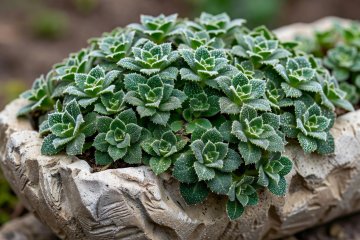
Engineering High-Elevation Scree: Grit, Tufa, and Drainage
In alpine botany, traditional potting soil is poison. High-altitude flora inhabit barren mineral slopes where constant gravitational percolation prevents water from stagnating around the plant's collar.
1. Particle Sizing and Pore Hierarchy
A functional scree substrate relies on three distinct particle fractions: coarse skeletal aggregates (4–8mm), bridging sharp sand (1–3mm), and a minimal buffering fraction of fine humus loam (<1mm).
The skeletal grit maintains structural macropores that drain instantly under storm conditions, preventing oxygen depletion around sensitive mycotrophic roots. Meanwhile, the angular sand particles maintain microcapillary columns, drawing subterranean groundwater up toward root tips without drowning the crown.
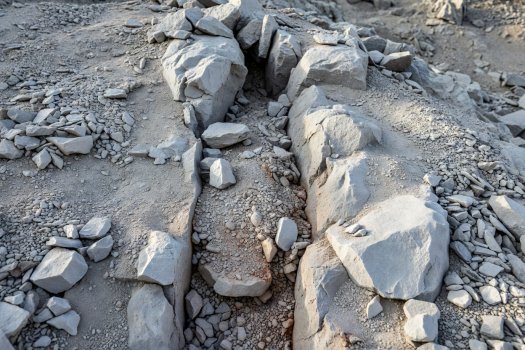
| Substrate Stratum | Composition Ratio | Depth Profile | Hydraulic Objective |
|---|---|---|---|
| Collar Mulch | 100% Crushed Granite / Tufa Chips (4-8mm) | Top 30mm – 50mm | Zero water retention; absolute dryness around crown neck |
| Root Matrix | 60% Quartz Grit, 25% Coarse Sand, 15% Sifted Loam | 50mm to 350mm depth | Capillary moisture films without free-standing saturation |
| Basal Drainage | 100% Crushed River Rock / Crushed Brick (15-25mm) | 350mm to 500mm depth | Percolation runoff chamber preventing base water table rises |
2. The Tufa Advantage
Calcareous tufa is a precipitated freshwater limestone formed around thermal springs and moss banks. Its structure is riddled with microscopic tubes and voids, making it unusually lightweight and porous.
When used in scree mixes or as drilled boulder islands, tufa acts as a biological moisture wick. The interior of a tufa rock remains pleasantly cool and slightly damp during summer droughts, while its dry exterior stone crust prevents pathogenic damp-off fungi from attacking delicate plant stems.