Building Dynamic Crevice Beds with Vertical Stone Strata
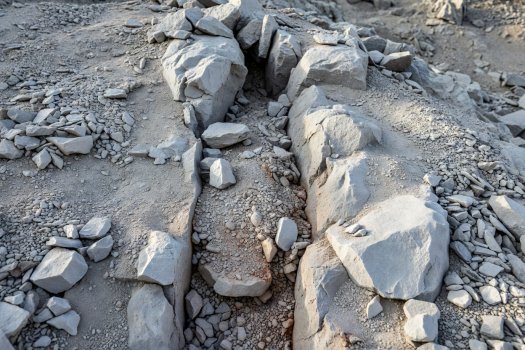
Vertical crevice gardening is the single most transformative technique in modern alpine horticulture. By standing flat sedimentary stones on edge, we solve root overheating and basal fungal decay simultaneously.
1. Geometrical Orientation and Sun Aspect
When constructing an alpine crevice bed, slab orientation dictates temperature fluctuations across the root run. In natural montane screes, fissures oriented North-to-South receive direct midday sun overhead for brief periods, while the vertical stone faces cast shadows deep into the fissure during morning and late afternoon.
We recommend tilting your stone slabs between 15 and 30 degrees off vertical. This deliberate pitch guides rainfall directly downward along the lower rock slab, delivering moisture straight to primary taproots while keeping the upper rosettes dry.
| Stone Specimen | Porosity Index | Thermal Buffer Rating | Ideal Plant Association |
|---|---|---|---|
| Calcareous Tufa | Extreme (45% void volume) | Exceptional (Cool core) | Kabschia Saxifrages, Primula allionii |
| Sedimentary Sandstone | Moderate (12-18% void) | High stability | Daphne petraea, Androsace helvetica |
| Hard Limestone / Dolomite | Low (2-4% void) | Rapid night-time radiation | Campanula raineri, Edraianthus pumilio |
| Granitic Schist | Minimal (1% void) | Acidic mineral runoff | Silene acaulis, Eritrichium nanum |
2. The Sandstone Packing Protocol
Traditional garden soil causes sudden death in vertical beds. The gap between each stone layer must never exceed 25mm for cushion species. Fill this cavity with a dry mixture of 70% quartzite grit (2-4mm) and 30% coarse river sand.
As each stone tier is placed, settle the mineral substrate using a blunt wooden tamping lathe. Water copiously to eliminate air pockets before introducing bare-root alpine plantlets. The crown of the plant must rest flush against the rock face, secured with a small wedge of tufa or flat slate.
Crucial Construction Axiom
Never use round river boulders or haphazard horizontal stones for high-altitude montane flora. Horizontal stone faces trap stagnant rain on the foliage and bake the shallow roots under relentless summer sun. Vertical strata are mandatory.